Launching a CPG Brand in 2026 vs. 1996: Same Dream, Completely Different Nightmare
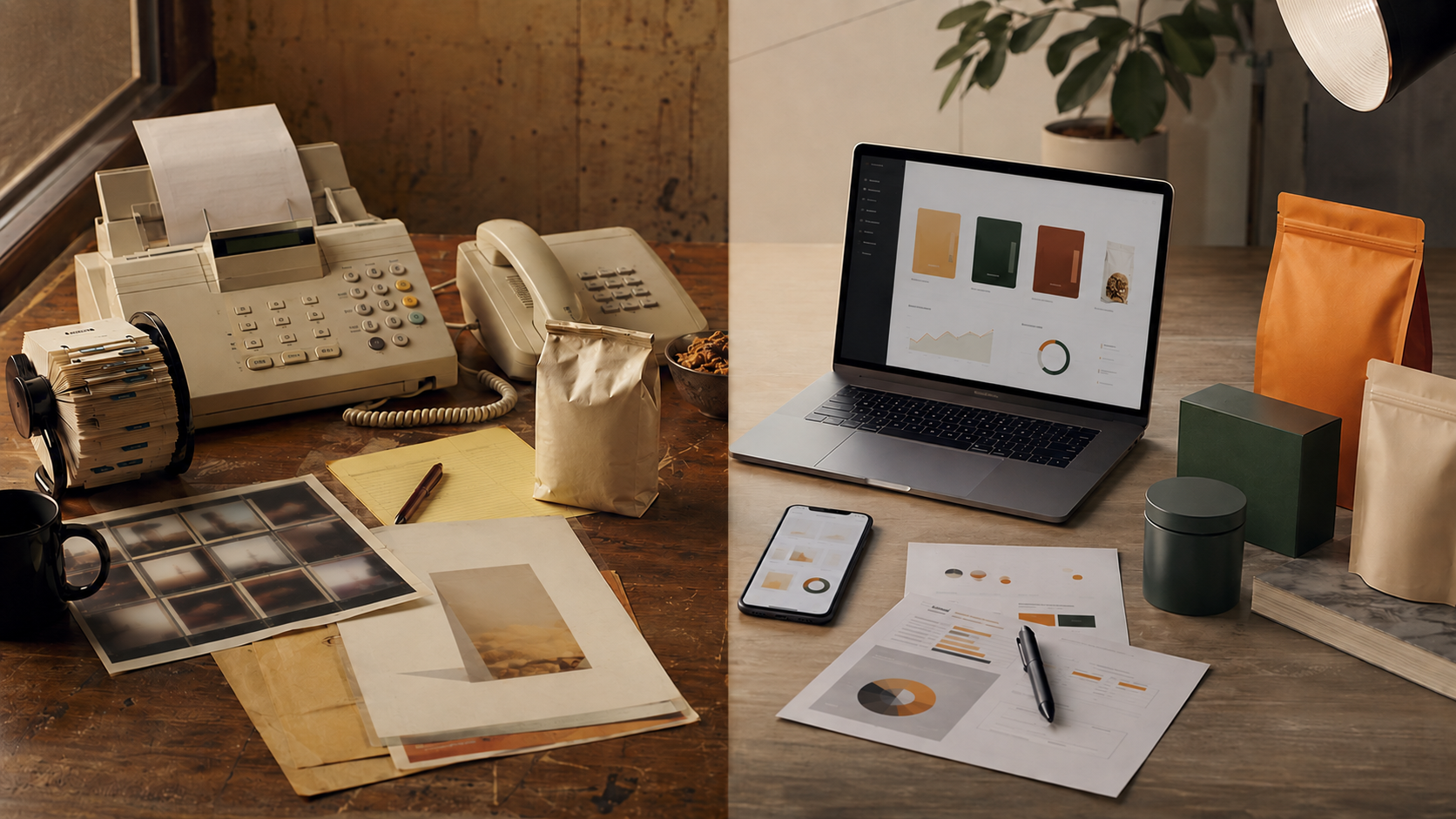
In 1996, launching a food or beverage brand meant a garage kitchen, a Rolodex, and a fax machine you prayed worked when you sent your first sell sheet to a regional buyer. In 2026, it means a Shopify store built in an afternoon, a TikTok account, and an AI chatbot that might recommend your competitor by name because their website has better structured data than yours. Progress, arguably. Easier, not even close.
The Money Part Got Weirder, Not Easier
In 1996 you needed real capital and real patience. A bank loan, maybe a second mortgage, a slow crawl through regional distributors who wanted six months of sales history before they'd return your call. Painful, but at least predictable. You knew the ladder: local store, regional chain, regional distributor, maybe national in five to seven years if you didn't run out of money first.
In 2026 you can launch with a fraction of that capital, a co-packer instead of your own kitchen, and a Kickstarter instead of a bank. Sounds better. Except now you're competing for shelf space against two thousand other brands who did the exact same thing last quarter, all funded the same way, all chasing the same eleven natural grocery chains that actually move volume. Capital got cheaper. Attention got more expensive. Nobody warns founders that the second problem is worse than the first.
Distribution Used to Be the Bottleneck. Now It's the Whole Game, Just Invisible
In 1996, if you got into a distributor, you were basically in business. The distributor's reps sold you into stores because that's what reps did all day, every day, with a fixed universe of maybe a few hundred SKUs to push per territory. Now a category manager reviews thousands of submissions a year, most of them from brands with a beautiful Instagram grid and zero actual velocity data, because anyone can look legitimate online now. Standing out means proving you're not vapor, which is a strange new problem nobody had thirty years ago, when just existing on a shelf was proof enough.
And it's not just physical distribution anymore. Getting picked up by KeHE or UNFI matters, but so does whether ChatGPT or Google's AI overview surfaces your brand when someone searches "best gluten free baking mix," a channel that did not exist, could not have been imagined, and definitely wasn't in anyone's 1996 five-year plan. Call it AI discovery if you want the modern term for it. It's the new front door, and most emerging brands haven't touched it yet, which honestly is an opportunity if you move now instead of finding out about it in three years from a panel at Expo West.
Diversity-Owned Brands Have More Doors and More Noise Behind Them
A woman-owned or minority-owned brand in 1996 had almost no formal path in. No certification bodies with real retailer recognition, no supplier diversity portals, no mandates pushing buyers to actively source diverse suppliers. You got in on relationships and grit, full stop.
In 2026 those doors exist. WBENC and NMSDC certifications open real conversations. Retailers have stated diversity commitments, some of them even backed by an actual budget instead of a webpage. That's real progress and worth saying plainly. But the door being open doesn't mean the room isn't crowded. Every certified brand is chasing the same supplier diversity buyer contact, and the ones who win are still the ones who show up with real numbers, not just a certificate and a good story. The access changed. The bar to convert that access into shelf space didn't move an inch.
What Actually Got Easier
Sampling and trial. Building an audience before you have a single retail door. Testing flavors, packaging, and pricing in weeks instead of years because you can run a real experiment on a few thousand dollars of ad spend and know within a month whether anyone wants what you made. In 1996 that kind of market feedback took a regional test market and a year of your life. Founders in 2026 waste that advantage constantly by skipping straight to a national pitch deck before they've proven anyone outside their own group chat actually wants the product.
What Actually Got Harder
Everything else. Standing out in a feed everyone's fighting for. Earning trust from a shopper who's been burned by a hundred brands promising clean and healthy and delivering neither. Getting a buyer's actual attention when their inbox gets more pitches in a week than a 1996 buyer got in a year. The tools multiplied. So did the competition using the exact same tools, which is the part every founder discovers about six months after launch and roughly zero founders plan for on day one.
The brands that make it in 2026 aren't the ones with the best product story. Plenty of those exist and go nowhere. It's the ones who treat all this new access, the DTC channel, the AI discovery, the diversity certifications, the co-packer shortcuts, as tools for building a real business instead of a substitute for one. The fundamentals didn't change since 1996. Margin has to work. Velocity has to be real. Someone has to actually manage the relationship after the first order ships. The tools around those fundamentals just got a lot more interesting, and a lot more crowded.
Honey Bee Brands has run CPG sales through both eras and knows which parts of the old playbook still matter. If you're launching now and want a strategy built for how retail actually works in 2026, not how it worked when your buyer's boss started their career,